Picking the one entrance we work
We walk the whole tree first and count the openings. A tree that has been pruned, storm-damaged or nicked by a mower over the years often has more than one way in, and the bees will use all of them.
We then choose the single entrance the trap-out will run through. It has to be one we can reach and work at safely with the cone and the hive body next to it. Every other opening gets closed in the next step.
Closing every other way in
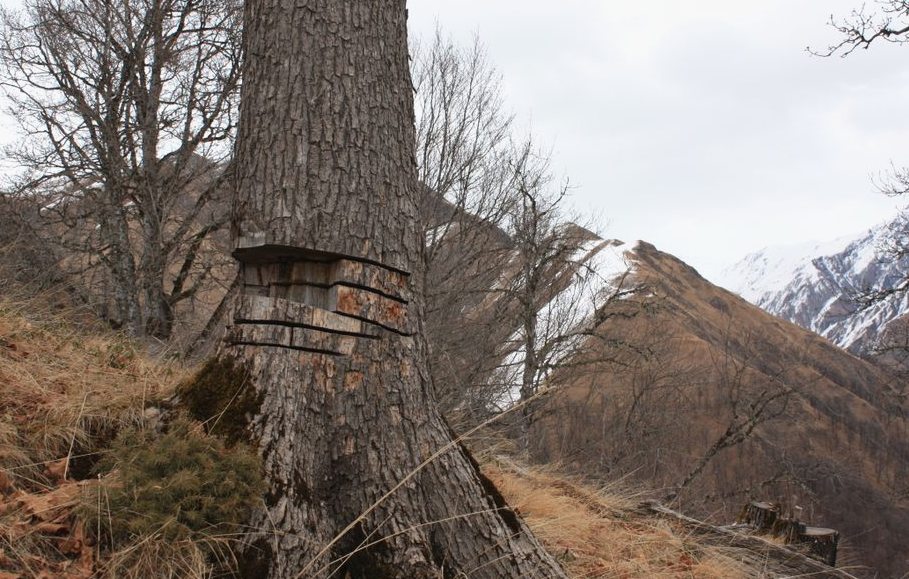
Once we've chosen the working entrance, we close every other opening on the tree so the bees can't go around the cone. We use wire on the larger gaps, and putty, tar, rags, glue or spray foam for the rest, depending on the size and shape of each hole.
If a single opening is missed, returning bees use it and the cone does nothing. So we're thorough on this step and recheck every closed opening before we leave. The chosen entrance stays open because that's where the cone goes.
Moving the colony into the box
The cone goes over the open entrance so bees can leave the tree but can't get back in. Close to the cone we set a hive body holding a small colony, which gives the returning bees somewhere to go. When we use a bait box instead, we stock it with frames of brood and honey so the bees have a reason to settle in it.
West Palm Beach is hot, with a long cooling season, so a colony in a tree here is active for much of the year. We plan the setup on that basis.
What a tree trap-out costs
A tree honey-bee trap-out runs $300 to $1,000. We can give you that range on the phone. We confirm the exact number after we've seen the tree, because the price depends on how many extra openings we have to close, how easy the working entrance is to reach, and how much setup the colony needs. One clean hole to seal is quick work. Several small gaps around a trunk take longer, and the price reflects that. Once we've seen the tree, we put the number in writing before we start.
Start to Finish
Piece by piece, the specifics look like this:
- Where the tree has additional exits, close all but the selected entrance so bees cannot bypass the cone.
- Allow departing field bees to join the outside hive; the queen and house bees may remain in the tree cavity.
Other Services We Offer
No-Pressure Quotes
You can explain it on a quick call, and you'll get a clear answer.