
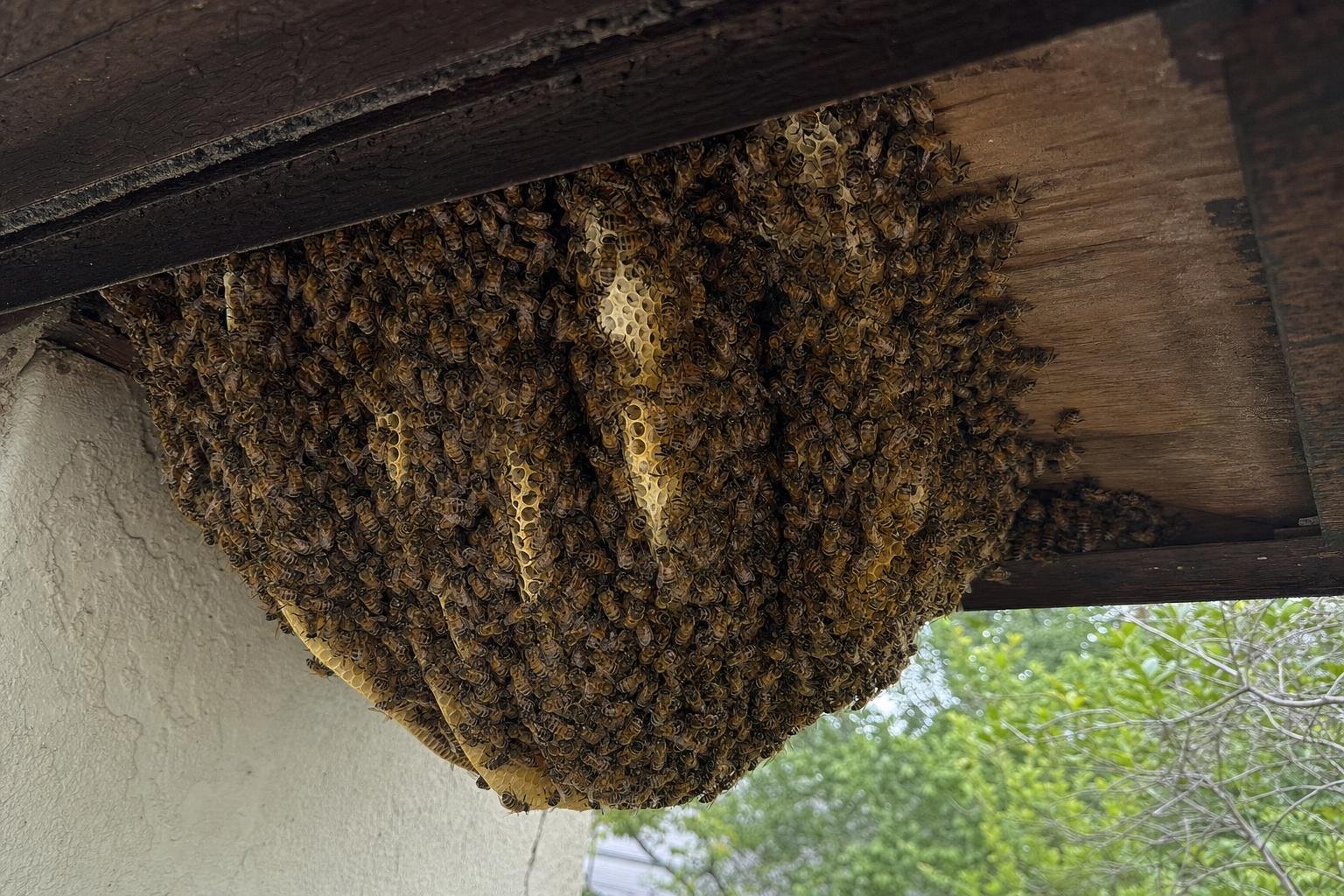
Getting them out means opening that soffit from outside, taking the colony out of the cavity alive, and closing the house back up so the seam isn't left open for the next swarm. You end up with the bees gone and the eave put back together.
Suiting up for work under the eave
Every soffit job starts with full gear: bee suit, veil, gloves and boots. A colony overhead means bees dropping onto whoever is on the ladder, so nothing is left uncovered.
West Palm Beach is climate zone 2A, with a long cooling season, and that gear is hot. We plan the work for the part of the day when the crew can wear it and still do careful work at height.
Worth comparing with chimney colony removal. Searching for bee removal in West Palm Beach? Our home page covers it.
More answers: Budgeting for Bee Removal: Real Price Ranges Explained · Insurance Claims for Bee Removal: What to Document
Opening the soffit and vacuuming the colony
We open the soffit at the entry and along the run as far as the colony actually extends. Then we use an adjustable low-suction bee vacuum that feeds into a ventilated collection box.
The low suction pulls live bees out of the cavity without crushing them. The ventilated box lets the colony breathe while we finish clearing the space, instead of overheating in a sealed container.
Closing it up without blocking the vents
Before we leave, the soffit or any other material we removed goes back on, and the entry gaps we confirmed get sealed. We don't leave the eave open.
We seal only the gaps the bees were using. Soffit vents are there to ventilate the roof space, and in a climate with this long a cooling season that airflow is doing real work, so we leave it open.
Checking that the traffic has stopped
After the work is done, we watch the former entrance in daylight to confirm the bees have stopped using it. A quiet entrance is the sign the job is finished. If bees are still working that spot, there's another opening we haven't dealt with yet, and we keep at it until the traffic stops.
What a soffit cut-out costs
A soffit live cut-out runs $550 to $1,800. That range covers the cut-out itself. Extensive carpentry and high-access work are charged on top of it.
Where a job lands in that range depends on how much of the soffit has to come open and how hard the run is to reach. We can give you the typical range on the phone, and we confirm the exact number once we've seen the house.
Inside the Job
On a typical job, the work covers:
- Scrape wax and propolis from framing, remove contaminated insulation and spilled honey, then clean and dry the cavity.
- Replace opened soffit or other removed building material and seal confirmed entry gaps without blocking required ventilation.
Other Services We Offer
Fast Scheduling
One phone call is enough to get going, with no sales pitch.